Project at a Glance
To design a common web based solution to set up a digital platform in cloud to host and integrate customer experience solutions
Design Brief
Brief
- The client is establishing global Digital Experience (DX) Centres to showcase digital solutions, conduct innovation workshops, and rapidly prototype MVPs. While physical infrastructure and demo solutions are in progress, there is a need for a cloud-based platform to centrally host content, enable remote demos, support rapid prototyping, and foster global collaboration.
Problem Statement
- How might we design a scalable, cloud-based platform that enables seamless hosting and demonstration of digital solutions, supports rapid prototyping, and facilitates global collaboration across DX centres to drive innovation and client engagement ?
Process
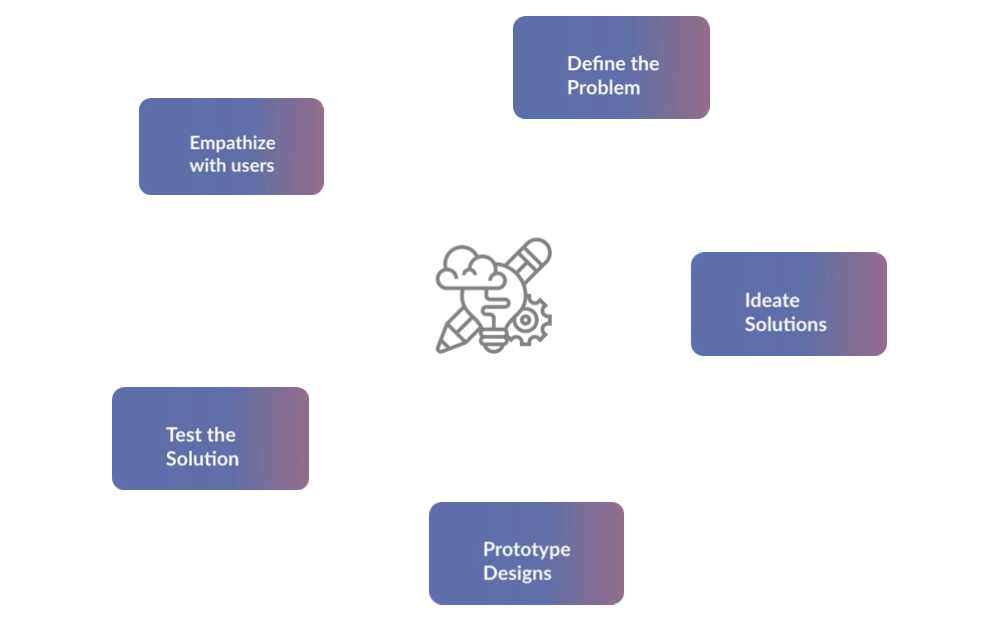
- Followed Design thinking methodology which includes five stages: Empathise, Define, Ideate, Prototype and Test
- Eventually created a digital portal which will can be accessed globally for all labs to integrate customer experience solutions
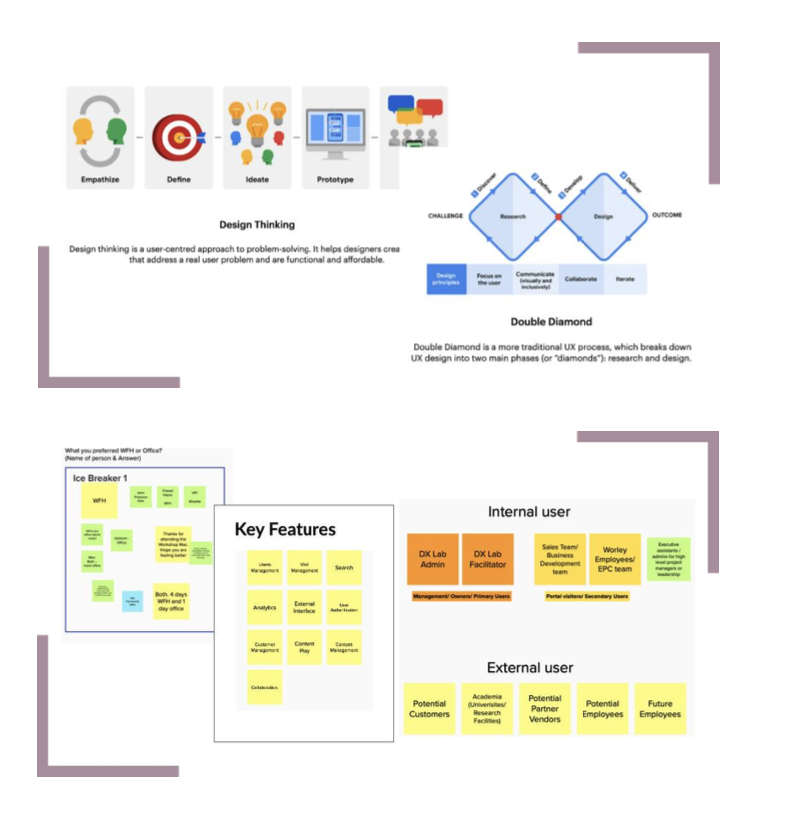
Workshop (Day 1) - Empathise with users
Objective
- To identify key features of the portal
- To identify the user base/user groups
Process
-
Introduced participants to design principles, methodologies, and process.
-
Conducted an ice-breaker to encourage interaction and build rapport.
Outcome
-
Identified key features: Visit Management, Customer Management, Search, Content Management, Analytics.
-
Defined user base:
-
- Internal: Sales, Employees, Engineering, Business Development, Lab Facilitators.
- External: Potential Customers, Universities, Partners/Vendors, Potential Employees.
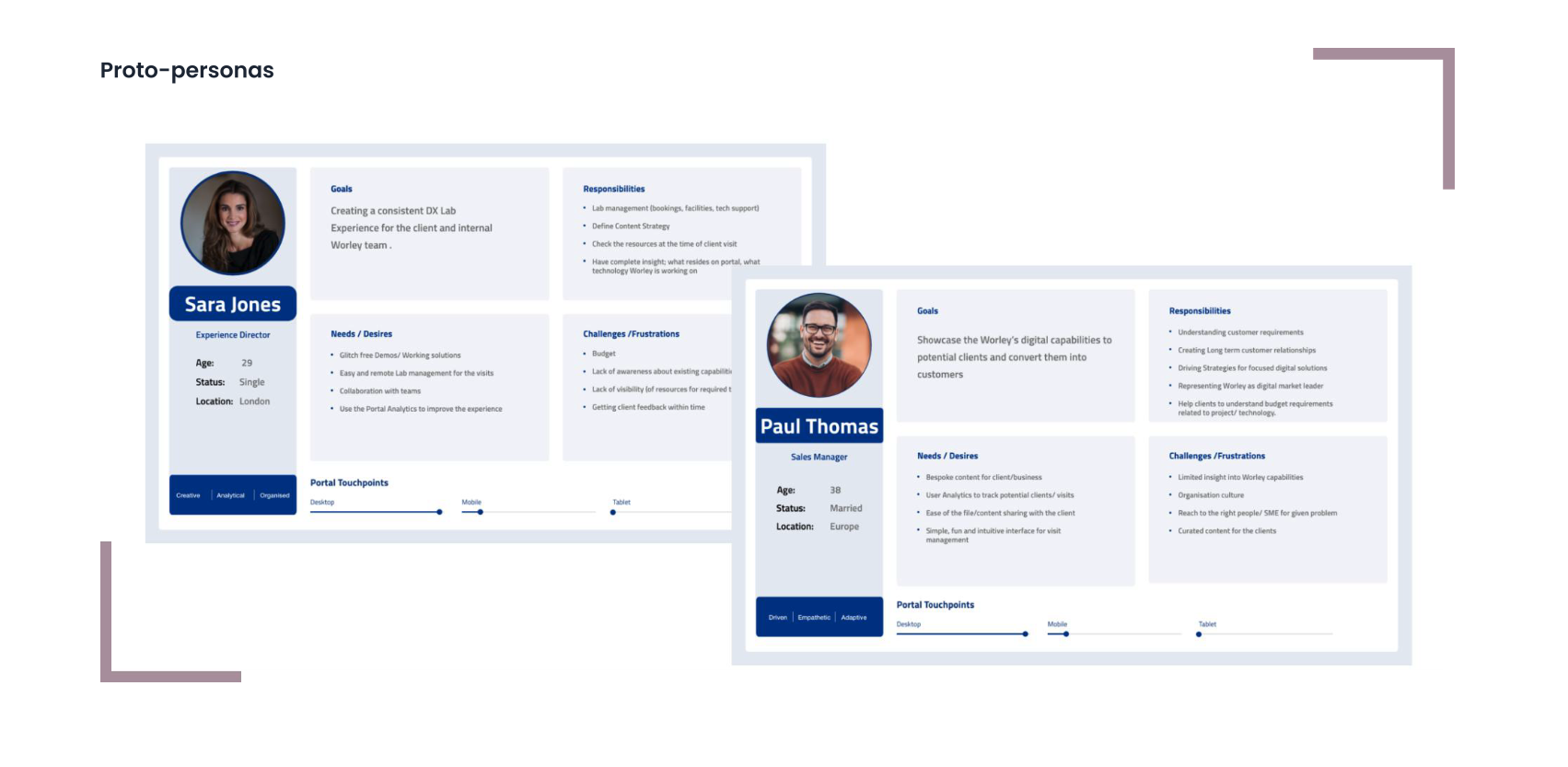
Workshop (Day 2) - Empathise with users
Objective
- Identify two key user roles for further activities
- Understanding each user role in detail to build prototype personas
Process
- Group voting to select key representative roles.
- Brain dump session on Goals, Responsibilities, Needs, and Pain Points.
- Voting focused on Goals; remaining inputs organized into an affinity map.
Outcome
- Converted insights into persona templates for each user role.
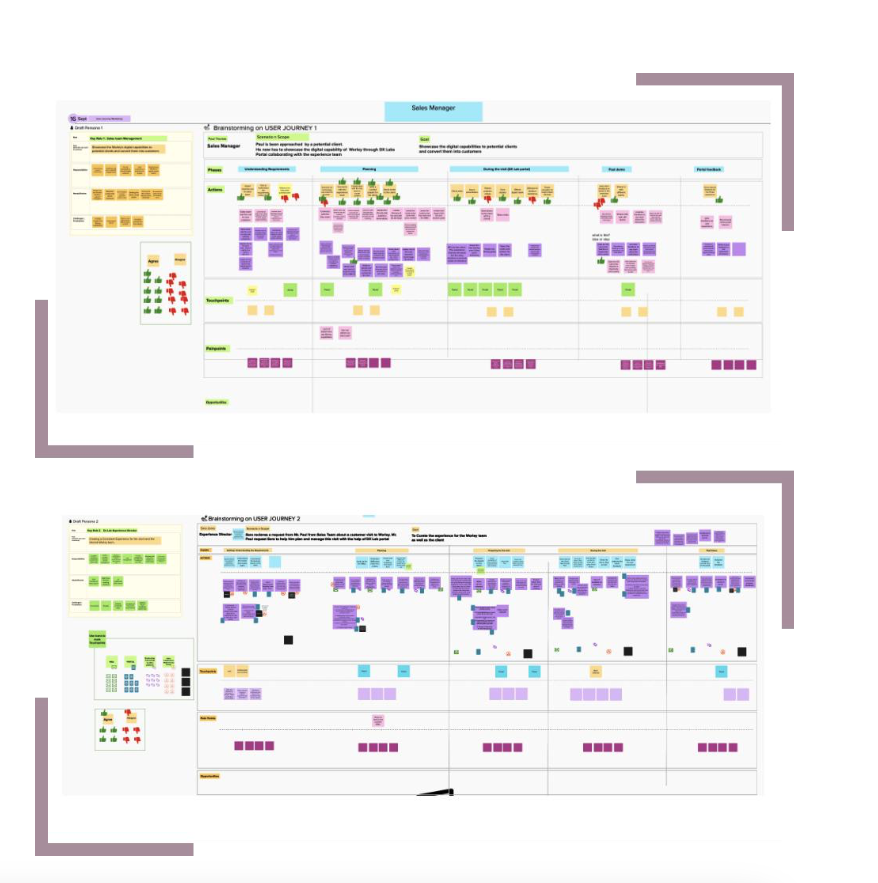
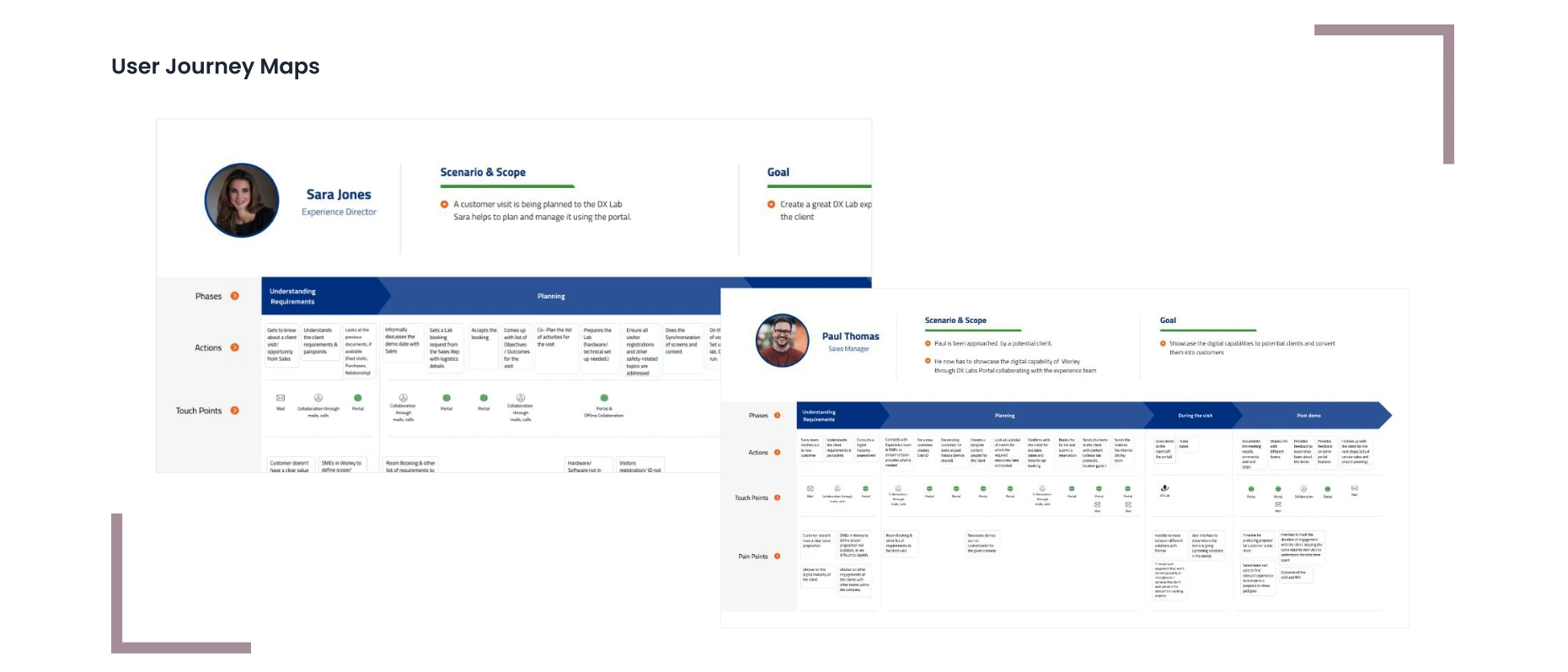
- Created hypothetical journey maps to guide the next ideation workshop.

Workshop (Day 3) - Empathise with users
Objective
- Align on the ideal “To-Be ” journey experience within the portal.
- Identify actions, touchpoints, pain points, and opportunities for each persona
Process
- Applied SCAMPER to evaluate and reimagine journey steps.
- Brainstormed potential pain points and frustrations at each stage.
Outcome
- Digitized insights into detailed user journey maps.
- Extracted inputs to define problem statements for screen-level ideation.
Workshop (Day 4) - Empathise with users
Objective
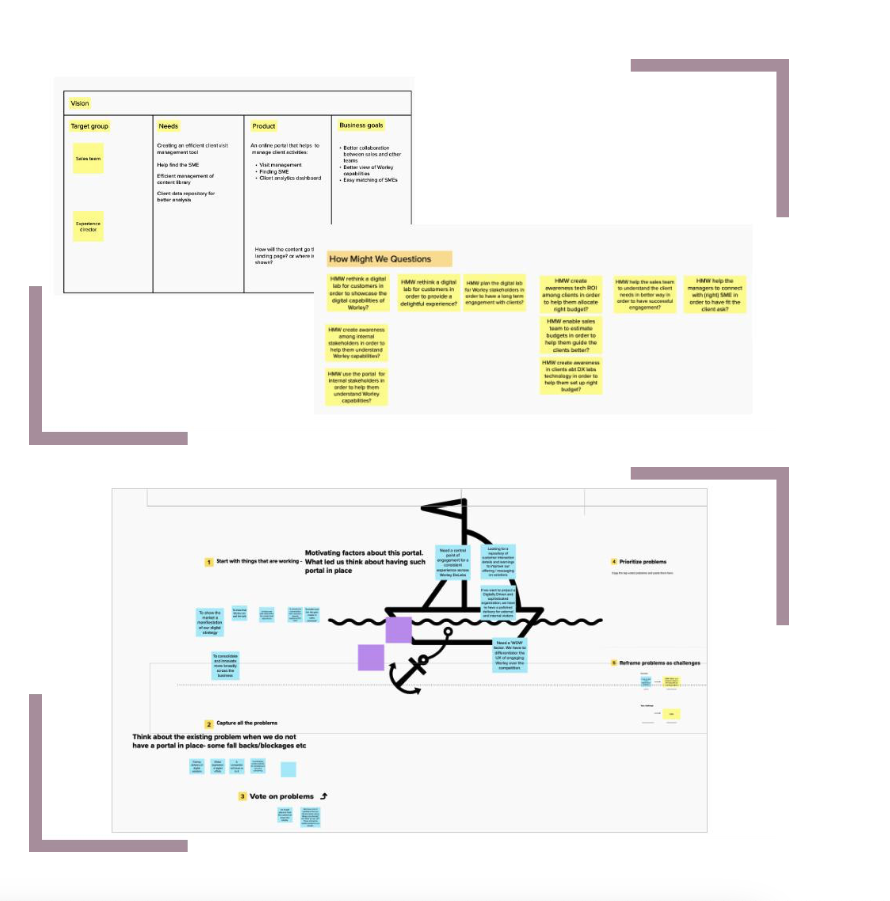
- To find out vision statement
- To come up with possible problem statements for ideation
Process
- Defined vision statement and “How Might We” questions through group voting.
- Used Lightning Decision Jam to surface key problems.
- Brainstormed user pain points across the journey steps.
Outcome
- Clear problem statements to guide feature-level design.
- Captured stakeholder inputs to inform early ideation.
Workshop (Day 5) - Empathise with users
Objective
- To come up with initial ideas to serve the problem statements
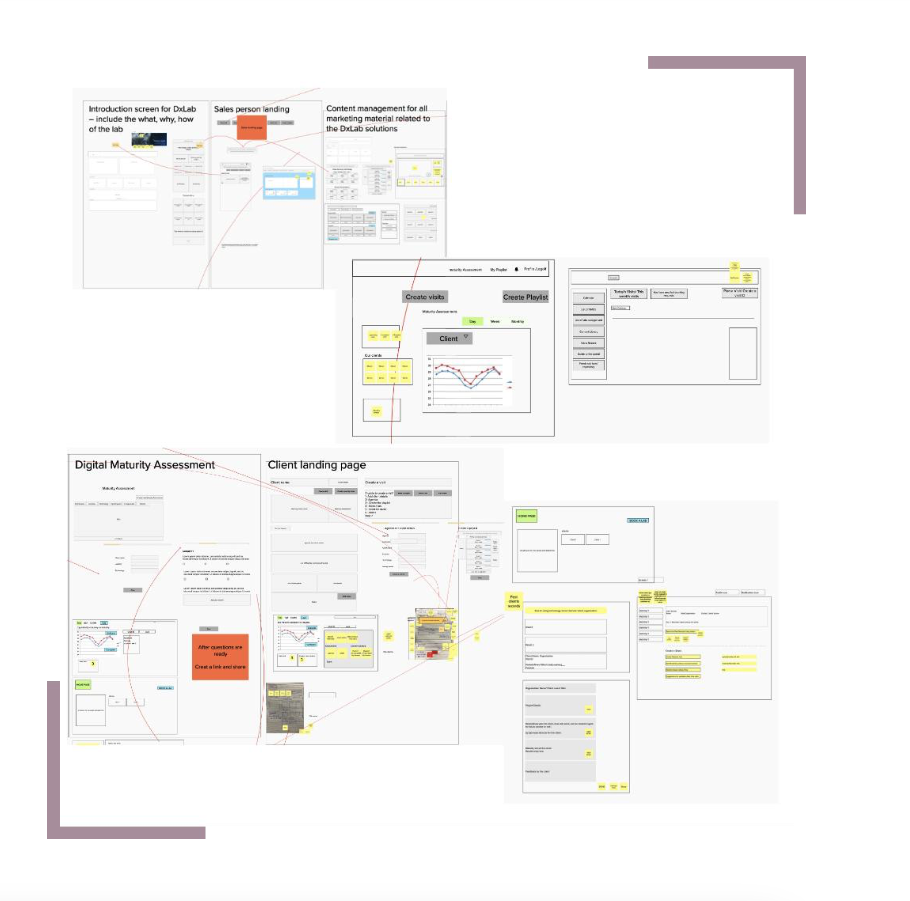
- To create low fi wireframes for key screens
Process
- Presentation of concepts to the participants to provide them food for thought for further ideation
- Building and improvising the wireframes with all the stakeholders
Outcome
- High level screen concepts which could be further digitalised to prototypes
Interaction Flows - Define the problem
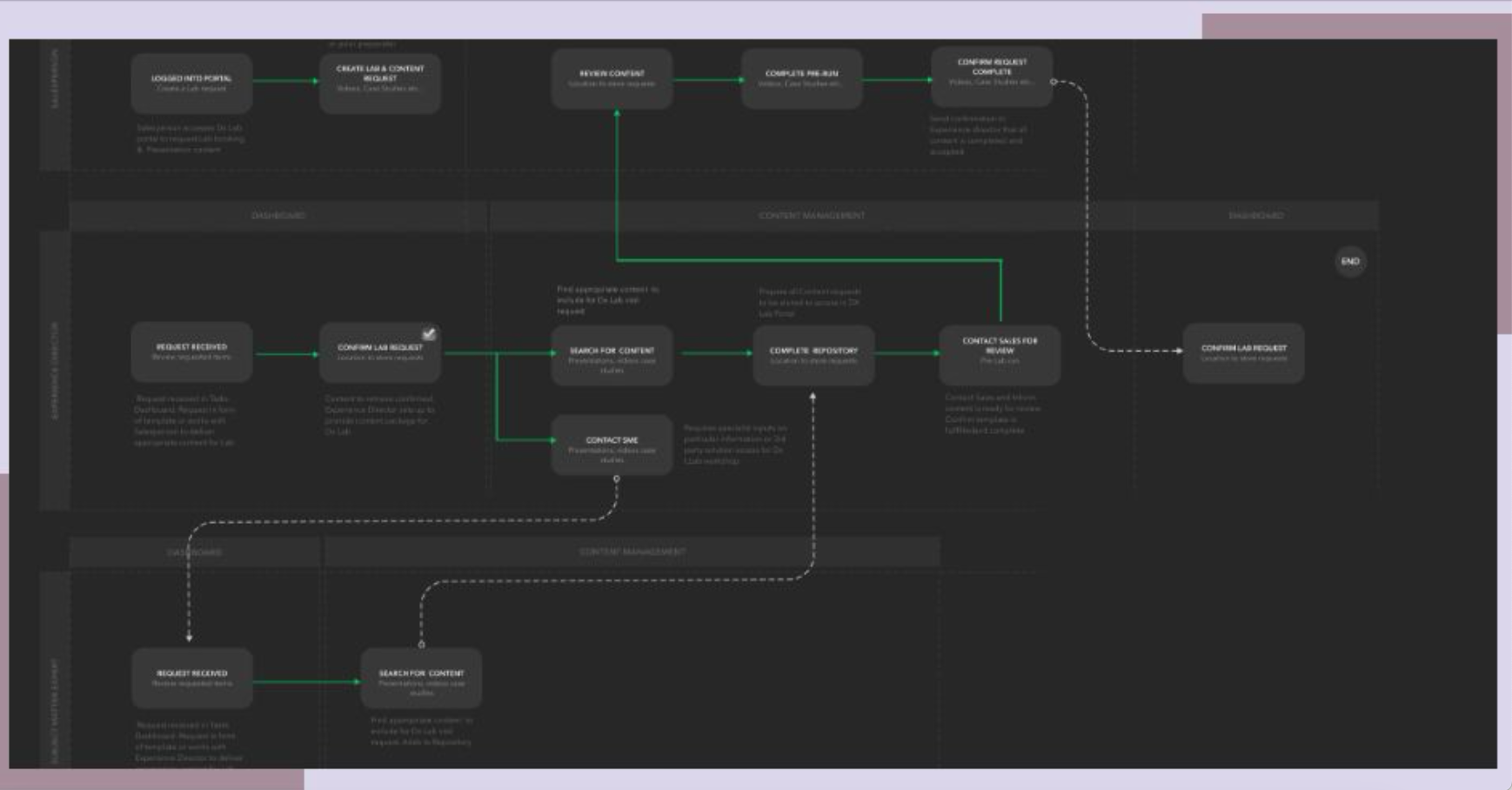
- After the initial ideation in the workshops, we took away the concepts
- Refined the concepts through further brain-storming and internal ideation sessions to create workflows and process flows

Interactive prototype - Define the problem
- Created low-fidelity prototypes and interactive prototype for key user flows to test the designs with the stakeholders
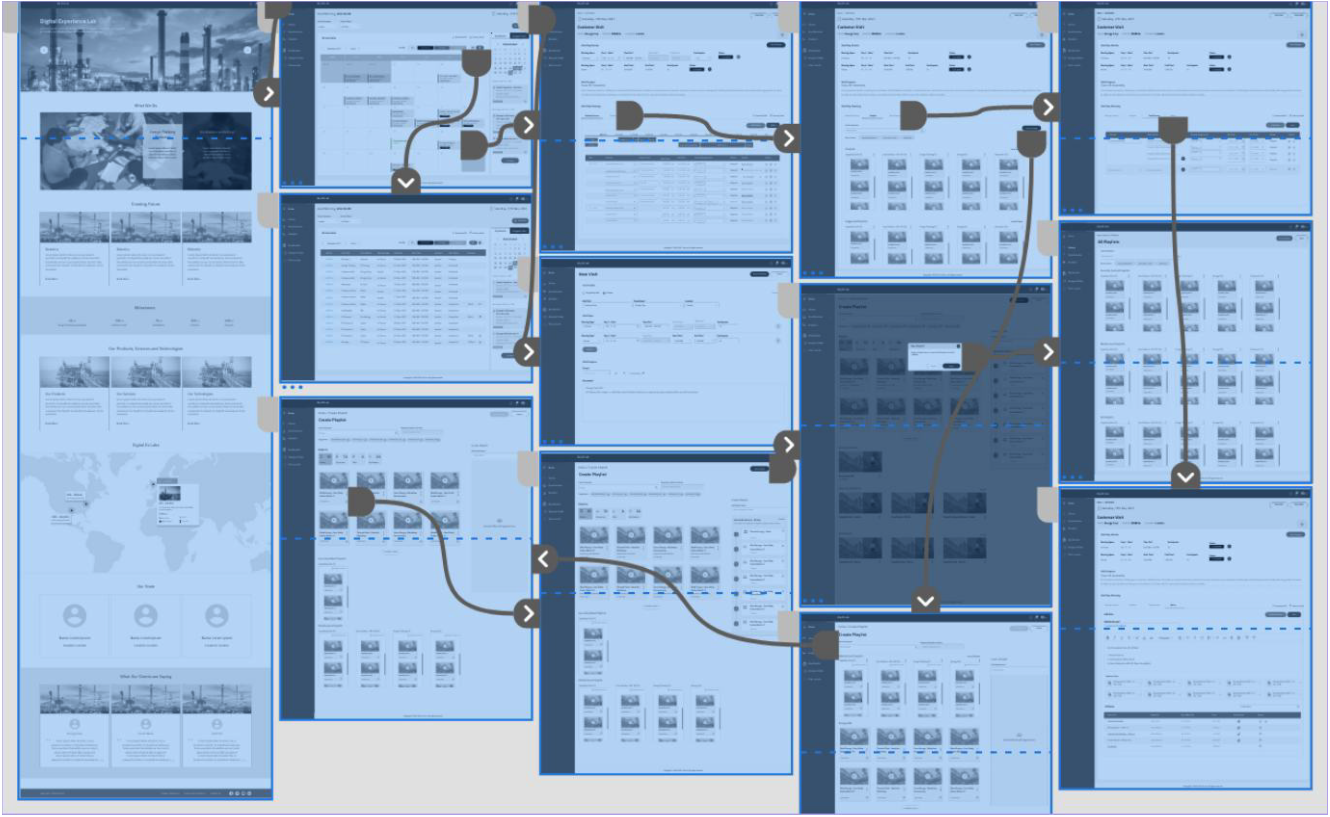
Hi-Fidelity Prototype - Define the problem
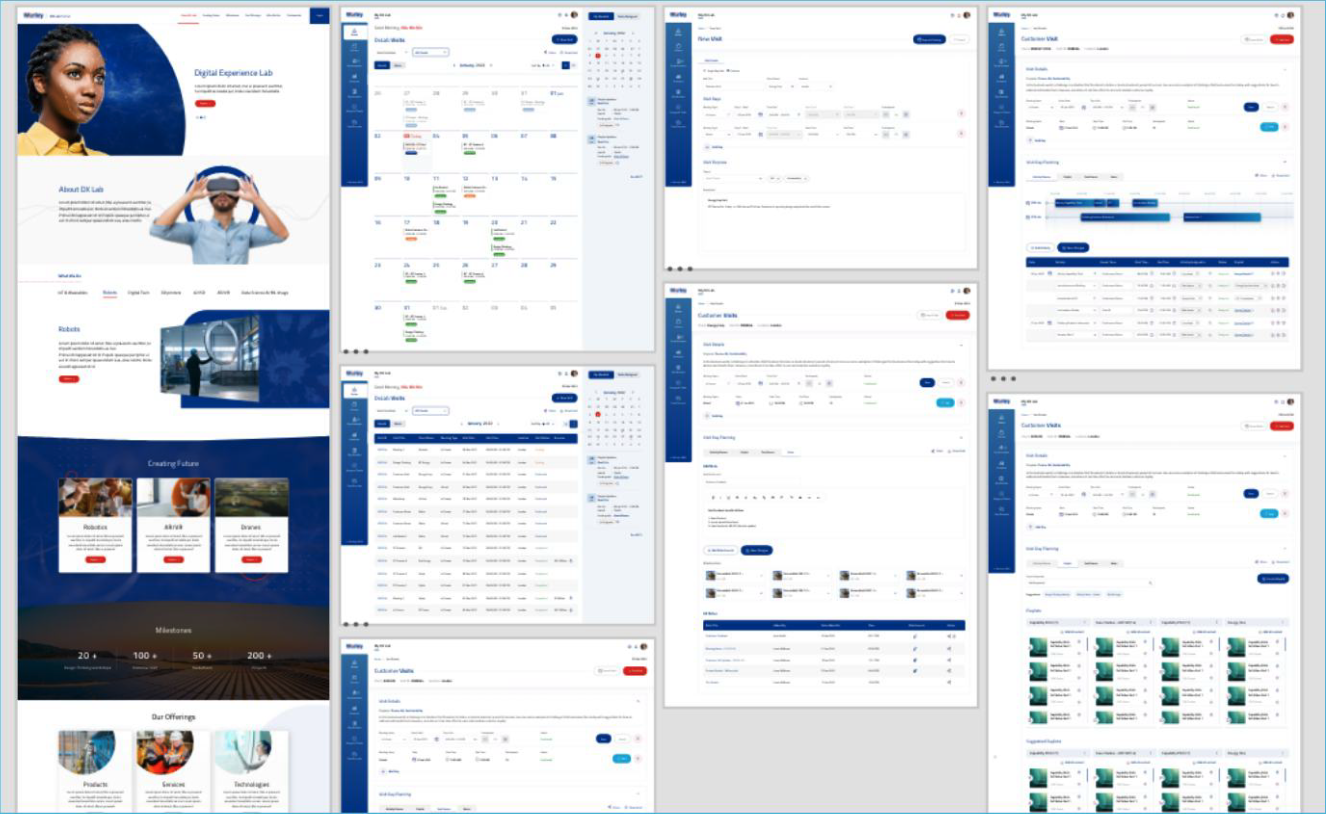
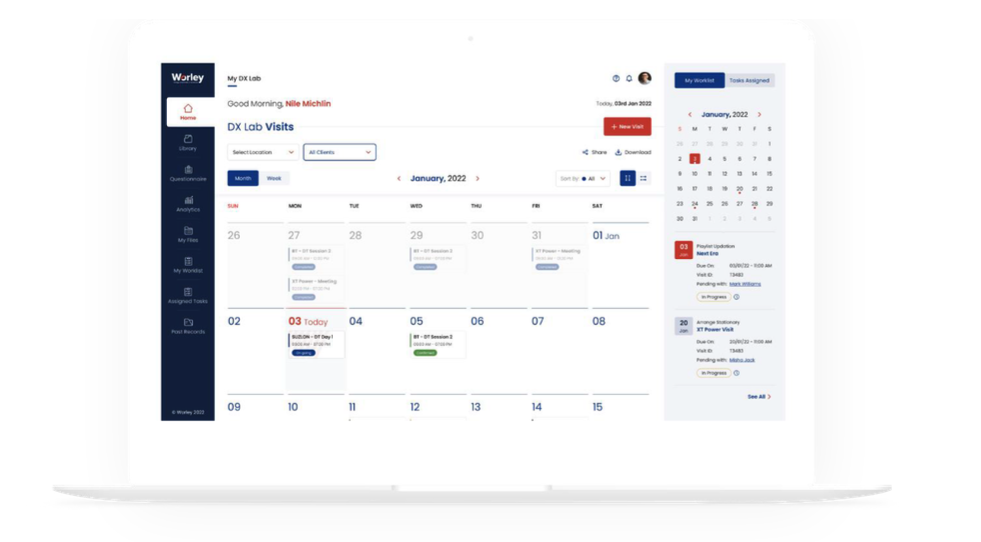
- Created hi-fidelity prototypes following the style guide and brand guidelines